
Press Release Vs Article: A Complete Comparative Guide


Let’s find a comparative analysis of press release vs article to determine which content can work the best for your business with a strategic approach.
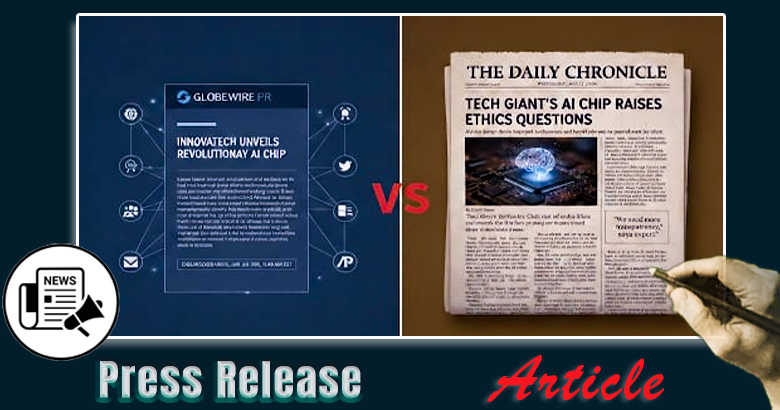
The realms of media and communication are fairly dependent on written content, which is considered to be the authentic source of information. In such cases, the media, journalists, and others are more likely believe the press releases and articles as they are addressed as original and official documents. While these two types of written content are widely used in media, they have distinctive features and purposes that make them complement different points of strength. Let’s get through a complete comparative discussion on press release vs article in order to have a better idea of their usage and leverage their benefits effectively.
Key Differences between a Press Release and an Article
While a PR and an article both are written documents for sharing information with the audience, each of the content types has its own purpose, structure, and usage. Let’s take a better look at it.
Variation in Formats
Even though you are just sharing information through your content, each piece of content should be written in a particular structure and format that makes it easily approachable and helps to represent the information in an organic and effective way. Starting from room for creativity, storytelling, and particular structural elements, there are many attributes to consider.
- Flexibility in Structure – Press releases have to follow a strict official format, which is accepted by all journalists and media. Articles, on the other hand, come with room for changes in format and style, which makes them more playful and dynamic.
- Focus on Content – While press releases aim to deliver the news story objectively, articles are mainly designed to grab the attention of the readers and keep them engaged. More than info sharing, articles can help to educate the online users.
- Reach among Audiences – PRs are particularly written to grab attention from media and niche journalists, which offers a massive media coverage. Articles can also captivate a wider audience base, but do not necessarily target the media.
- In-depth Information – Press releases are brief documents with to-the-point information that only focus on key facts. However, an article can take a deep dive into a topic and make it personalized for a wider and niche audience base.
Evidently, a press release is more commonly used in case of straightforward announcements, while an article can make the narrative more engaging and appealing for the online users to read.
Purpose Clarity
Since both of the documents, PRs and Articles, are still confusing to many, business and brand owners often think they both serve the same purpose. Other than its structural differences, the two content types also come with different purposes and clarity.
- Purpose – PRs help to share information about some particular events, news, or products. Articles come with the purpose of educating people or the public on various subjects. While marketing and promotion are the main purposes of PR, articles are likely to educate and engage people. However, both content types can be used for the purpose of spreading a digital footprint in this competitive age.
- Clarity – PR is considered to be one of the most effective promotional business tools that works for all kinds of businesses. Articles, on the other hand, can offer valuable insights without a direct approach like an advertisement. It feels more organic and sounds less salesy.
- Length – As mentioned before, press releases are typically short in length, and this brief document can go up to 350 to 500 words. Articles, on the other hand, can be longer when it comes to word count, and their writing style also incorporates well-crafted stories.
The PR helps to make a quick announcement, which is specially designed to share the news efficiently and promote the company. Articles do not push a sales pitch in their approach, and they aim to inform and engage the users by taking a deeper dive into various topics.
Usage of Professional Document
Whether it is a press release or an article, its effectiveness is fairly dependent on how you are trying to use it and leverage its benefits for your business. Using the documents strategically is the key to success.
PRESS RELEASE
The right time to use a press release would be when you are trying to spread your company’s message out there with the media and niche audiences. Here are some tips to utilize,
- Product and Service Launch – PRs are great for launching a new product or service, as they help to offer the juicy details in a structurally well-designed document. It helps to grab the attention of the media, journalists, and niche customers.
- Gain Media Attention – Other than launch programs, there are many other types of business announcements that require media attention, such as partnerships, rebranding, awards, recognition, and so on. PR distribution is highly suitable in this case.
- Time is the Key – PR has its significance due to its time-sensitivity, and that’s why it is considered news that is impactful and offers better visibility.
- Narrative – Press releases can help to shape the narrative of the business story, which also helps in the reputation management of your business.
ARTICLE
Formal press releases are not able to create an appeal among the common people and mass online users. But an article is quite dynamic, and it has a comparatively casual approach, which makes it easily penetrable among the mass online users. Articles should be used to offer practical solutions, deep insights, expert advice, or just provide information on a particular topic. Articles are mainly used to build trust and authority, which helps to drive more traffic and allows for gaining more attention on social media.
Conclusion
Opting for the right format requires checking a lot of avenues, including knowing your audience, focusing on content, communicating objectives, shaping brand identity, and many others. Know your brand and your audiences to make the right choice for your business.
